Microsoft Security Copilot Integration — AI-Augmented SOC
As Lead Consultant to a major financial services enterprise, I designed and engineered a seamless Microsoft Security Copilot integration into the existing Incident Response playbook — enabling Tier 1 analysts to perform Tier 2-level forensic investigation using AI-assisted natural language queries, scaling SOC capability without additional headcount.
Client confidentiality
Some operational and technical details in this case study have been generalised to protect client confidentiality. The scope, outcomes and my role are accurately represented.
The Challenge
As Generative AI began to scale within a major financial services enterprise, the Security Operations Centre (SOC) faced a critical capability gap. Analysts were handling an increasing volume of complex, multi-stage attacks tracked across Microsoft Defender XDR — but manual investigation processes created bottlenecks that slowed detection and response times, particularly for Tier 1 analysts who were increasingly being asked to perform forensic work beyond their typical scope.
- Alert volumes and attack complexity were outpacing analyst bandwidth, with multi-stage threats requiring deep forensic investigation that Tier 1 staff were not equipped to perform at scale
- No structured AI-assisted workflow existed within the existing Incident Response playbook, leaving the organisation unable to operationalise its Microsoft Security Copilot licensing
- SOC leadership needed a practical path to AI augmentation that would improve capability without disrupting existing detection and response processes or introducing new operational risk
The Approach
I designed and engineered a seamless integration mapping Microsoft Security Copilot directly into the existing Incident Response playbook. I structured the integration specifically to augment — not replace — existing analyst workflows, enabling Tier 1 analysts to escalate their investigation quality to Tier 2 level without requiring additional headcount or specialist training programmes.
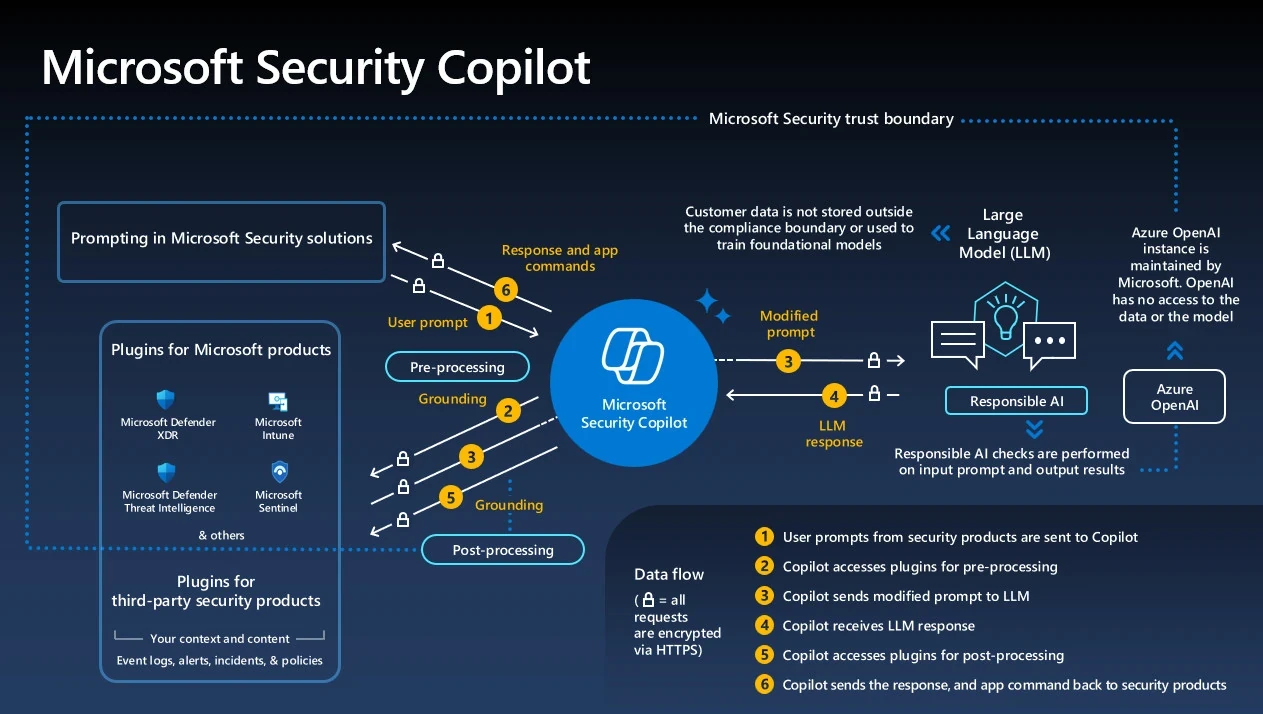
I architected the deployment to enable analysts to use natural language Prompt Engineering to instantly summarise complex incidents, reverse-engineer obfuscated malicious scripts, and generate automated KQL hunting queries — significantly reducing the technical barrier to advanced forensic investigation. I also mapped all Copilot capability areas to the MITRE ATT&CK framework, ensuring every query prompt aligned to known adversary techniques and supported a threat-informed defence posture.
The Results
I delivered a production-ready, AI-augmented SOC capability integrated directly into the organisation's existing incident response toolchain and playbook — with no process disruption and clear ownership maintained throughout.
Business & Security Impact
- Accelerated MTTR: Automated malicious script analysis and KQL query generation directly contributed to the capability for a 30% reduction in Mean Time To Resolution (MTTR) across complex, multi-stage incidents.
- Analyst Augmentation: Empowered Tier 1 analysts to perform Tier 2-level forensic analysis using natural language prompts, accelerating incident triage and summarisation workflows by nearly 40%.
- Operational Scale & High ROI: Scaled overall SOC capability without additional headcount, positioning the organisation to realise an estimated 99% to 348% ROI on their Copilot licensing investment over a three-year period.
- Reduced Alert Fatigue: Embedded advanced AI correlation steps to drop secondary alert volumes by over 20%, drastically reducing alert fatigue and lowering the probability of incidents requiring reopening.
- Threat-Informed Defence: Aligned the detection and response posture to the MITRE ATT&CK framework by mapping Copilot queries to adversary techniques, ensuring robust compliance with threat intelligence requirements.
My early, hands-on experience with Microsoft Security Copilot — gained during the product's preview programme — gave me a practical understanding of its constraints and optimal prompt engineering patterns that generic implementation guides do not reflect. This allowed me to build an integration that worked reliably in a production SOC environment from day one, rather than requiring iterative rework post-deployment.